
Go Premium. Get VIP. Be First.
As we build toward WPSL1, we're giving our earliest supporters something special: sign up for an annual Premium Subscription and receive a complimentary VIP ticket to:
WPSL1 3-DAY EVENT at Adrena, Saudi Arabia · October 2027.
Your subscription unlocks exclusive behind-the-scenes, full event & lead up videos and athlete video interviews, plus our members-only podcast.
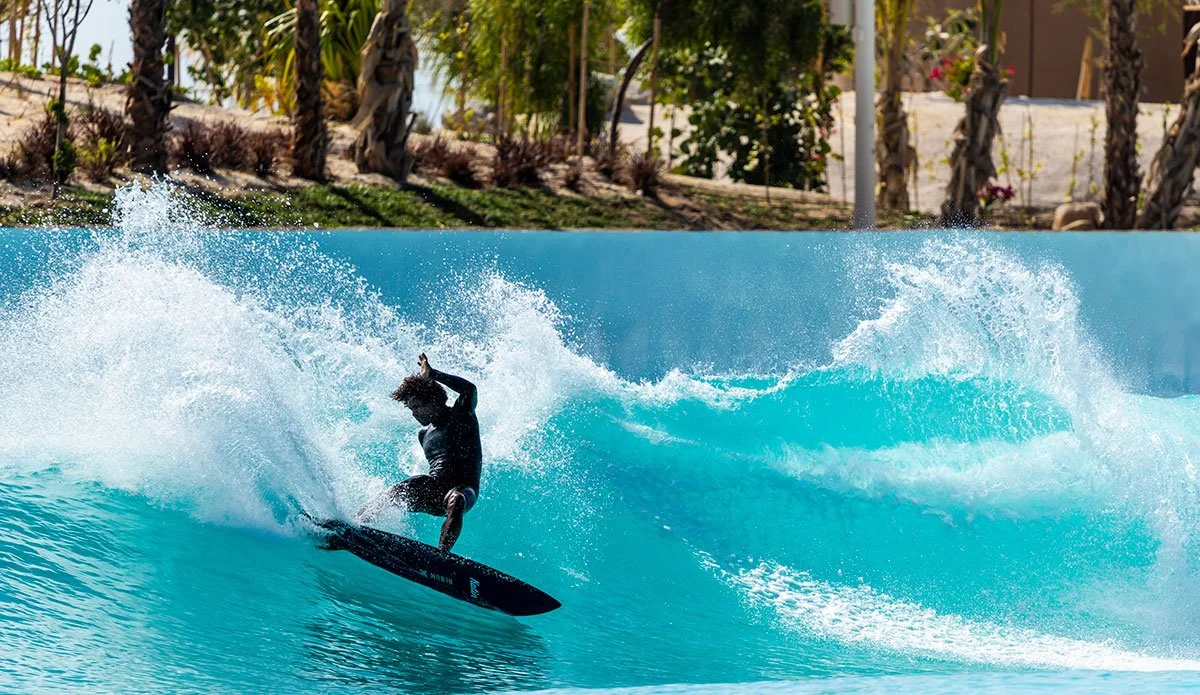
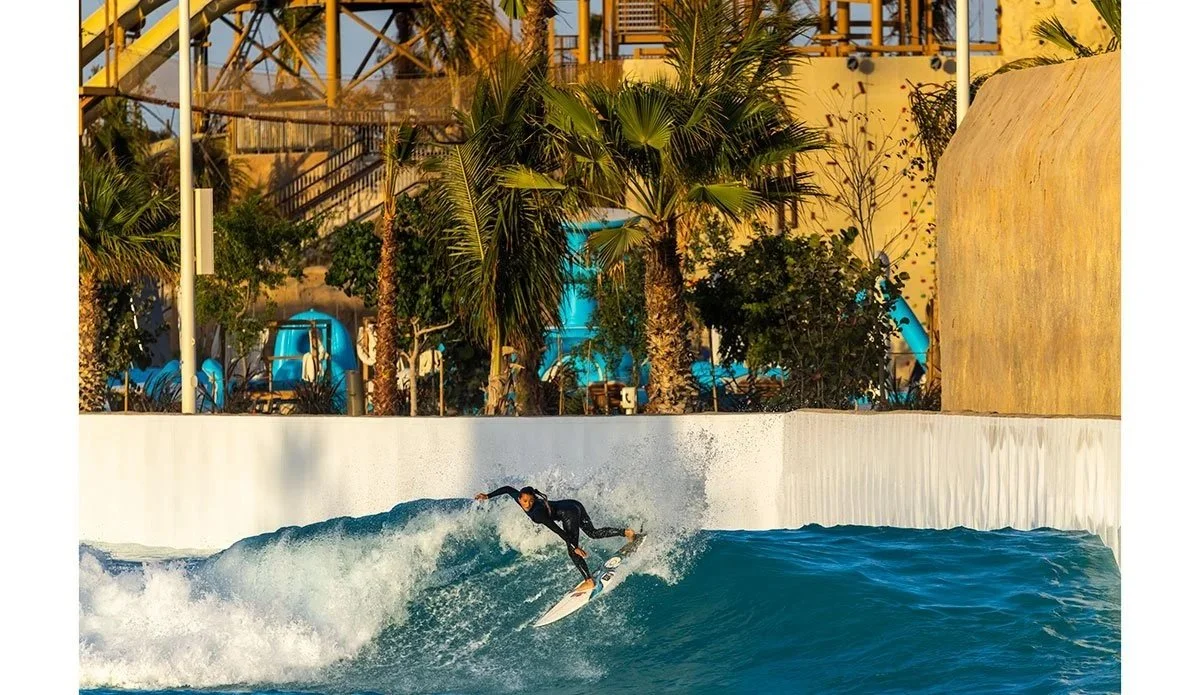
Why We Built Open Heats: Removing Prejudice from How We Judge Surfing.
Photography: Marcus Paladino
Why We Built Open Heats: Removing Prejudice from How We Judge Surfing.
At WPSL, we are often asked why we plan to run open heats, putting men and women in the water together, scored by the same criteria, competing for the same prize purse from day one. The honest answer is that surfing's judging system has never really been neutral, and we think it is time somebody said so.
A Young Kind of Equality
Surfing likes to think of itself as progressive. In some ways it is. The World Surf League announced equal prize money for male and female athletes across its controlled events from the 2019 season, becoming the first major US-based global sports league to do so. That is a genuine milestone, and the athletes who fought for it deserve enormous credit.
But it is worth sitting with how recent that milestone actually is. Less than a decade ago, the best female surfers in the world were still competing for smaller cheques than the men, in the same events, on the same tour. And pay parity, important as it is, does not by itself fix the deeper issue: how the sport decides what "good" surfing looks like in the first place.
Even after prize money was equalised, scheduling controversies kept surfacing. Women's heats have repeatedly been run in conditions widely regarded as inferior to the men's - smaller, messier, less rideable swells - while the best waves of a waiting period went to the men's draw. Fans, athletes and commentators have called this out publicly, year after year, at some of the sport's most high-profile venues. The pattern is well documented enough that it can no longer be dismissed as coincidence.
The effect of that pattern is corrosive, and it goes beyond fairness on any single day. When women are repeatedly shown to the world in lesser waves, audiences absorb a quiet lesson: that women's surfing is somehow a lesser version of the real thing. Nobody has to say it out loud. The scheduling says it for them.
Judging Is Never as Neutral as It Looks
Traditional surf judging asks a panel of humans to award a score out of ten based on criteria like commitment, degree of difficulty, and flow. It sounds objective. It rarely is. Judges are human, and humans form preferences - for a style, a story, a favourite, an underdog. That is not a scandal. It is simply what happens when subjective judgement is applied to sport. But it has never been openly acknowledged as a factor in how surfing scores its athletes, least of all across gender lines.
At WPSL, our approach starts from a different question. If good surfing has a bias baked into it, the fix is not to ask judges to try harder to be fair. The fix is to change what is being measured, and who is doing the measuring.
People Power™: Data First, Then the Human Voice
Our proprietary judging system, People Power™, works in two layers.
The first layer is purely analytical. An AI system reads each wave in real time - wave height, amplitude and tightness of turn, positioning in the pocket, height and rotation of airs, and speed carried between manoeuvre sections. It produces a technical score out of ten, and it can show its working: an on-screen overlay on the replay, breaking down exactly why the wave scored the way it did. There is no panel to please, no reputation to protect, no history with a rider that colours the number.
The second layer is human, and we think it should be. Our commentary team, led by 1988 World Champion Barton Lynch, gives the audience genuine technical insight into what they have just watched. Armed with that context and the AI breakdown, spectators then cast a live vote through technology built specifically for WPSL, producing an audience score out of ten. The final wave score is the average of the AI's number and the crowd's.
We are not trying to remove emotion from surfing. We are trying to be honest about where it belongs. An algorithm cannot reward the underdog, back a favourite, or feel a crowd lift for a rider mid-heat - and it should not pretend to. But an audience can, transparently, in the open, as a vote rather than a hidden thumb on the scale. Heart stays in the sport. It simply moves from behind a judges' curtain into the open, where everyone can see it operating.
The Question We Have to Ask Ourselves
Here is the uncomfortable part. Is elite surfing, as we currently score it, actually biased against women - or are the very best men genuinely superior athletes by every measure that matters? Judged against the traditional criteria, most people would say the men win that argument. So we removed the traditional criteria, and the judges who apply it, and asked the question again from scratch.
Is there a real reason the world's best female surfers cannot generate as much height in the air as the best men? Some of it, honestly, is physiology - power and mass do matter in certain manoeuvres. But raw power has never been the only language of athletic excellence. Timing, strength-to-weight ratio, precision and style are just as demanding, and just as worthy of a ten.
Some of this thinking comes from my wife, Rita, who surfs and has also competed in rhythmic gymnastics. Watching her move between the two disciplines, it is impossible not to notice the grace, timing and precision that gymnastics demands - qualities that are every bit as athletic as raw power, and that surf judging has historically undervalued.
There is a sporting precedent for this. Women's MMA does not compete against men in the octagon, yet it regularly headlines fight cards. Anyone who has trained jiu-jitsu knows that technique beats strength far more often than raw aggression does, and audiences who understand the sport watch women's fights with the same intensity as men's - not despite the technical skill on display, but because of it. Surfing, like skateboarding, is a sport where grace, timing and line can be every bit as compelling to watch as vertical power. It is our judging system, not the surfing itself, that has told audiences otherwise.
One Crown, Equal Opportunity to Wear It
We are not proposing a perfect system. We are proposing a fairer starting point, and we would rather say that plainly than pretend otherwise.
WPSL will crown one World Surfing Champion, not a men's champion and a women's champion competing in parallel for separate versions of the same title. That is a deliberate choice. It does not guarantee a woman lifts the trophy any more than it guarantees a man does. What it guarantees is that every surfer in the field, regardless of gender, has an equal opportunity to win it - the same waves, the same scoring system, the same heat, the same crowd. Nobody's route to the title runs through a smaller field, a shorter tour, or a lesser wave.
We also do not intend to lock this system in place and declare it finished. Rigid rules can strangle creativity in a sport built on self-expression - but the right amount of structure can also sharpen it, and finding that balance is not a one-off decision, it is ongoing work. So WPSL will move and flow with what actually works in the water, across different pools and wave conditions, rather than defending a format because it was the one we launched with. We expect to adjust judging weightings, heat structures and formats as we learn. The athletes competing in these heats, and the audiences voting on them, will do more to show us the right path forward than any boardroom debate could. That willingness to adapt is not a weakness in the model. It is the model.
Where This Leaves Us
We do not claim to have the whole answer. What we have is a starting position: score the wave, not the surfer's gender or reputation; put the criteria and the data on screen where everyone can check our working; and let the crowd's voice count for something, openly, instead of quietly through a judge's private instinct.
Remove the old prejudice from the criteria, and something interesting happens. Women's surfing does not need to be protected or handicapped to be compelling - it needs the opportunity to be judged on its own terms, in the same heat, against the same standard, in front of the same audience. Level the opportunity, and the level of the sport will follow. What "elite surfing" means will end up being shaped as much by the feminine contribution to the sport as the masculine one - which, business case aside, is simply a more interesting sport to watch.
It also happens to be good business. Women's surf and lifestyle brands consistently outperform their male-focused equivalents commercially. Building a sport that treats women's surfing as full value, not partial value, is not just the right call. It is the smart one.
WPSL1 Adrena, Saudi Arabia, launches October 2027 as the first event in a new global arena-based wave pool series, judged by People Power™.
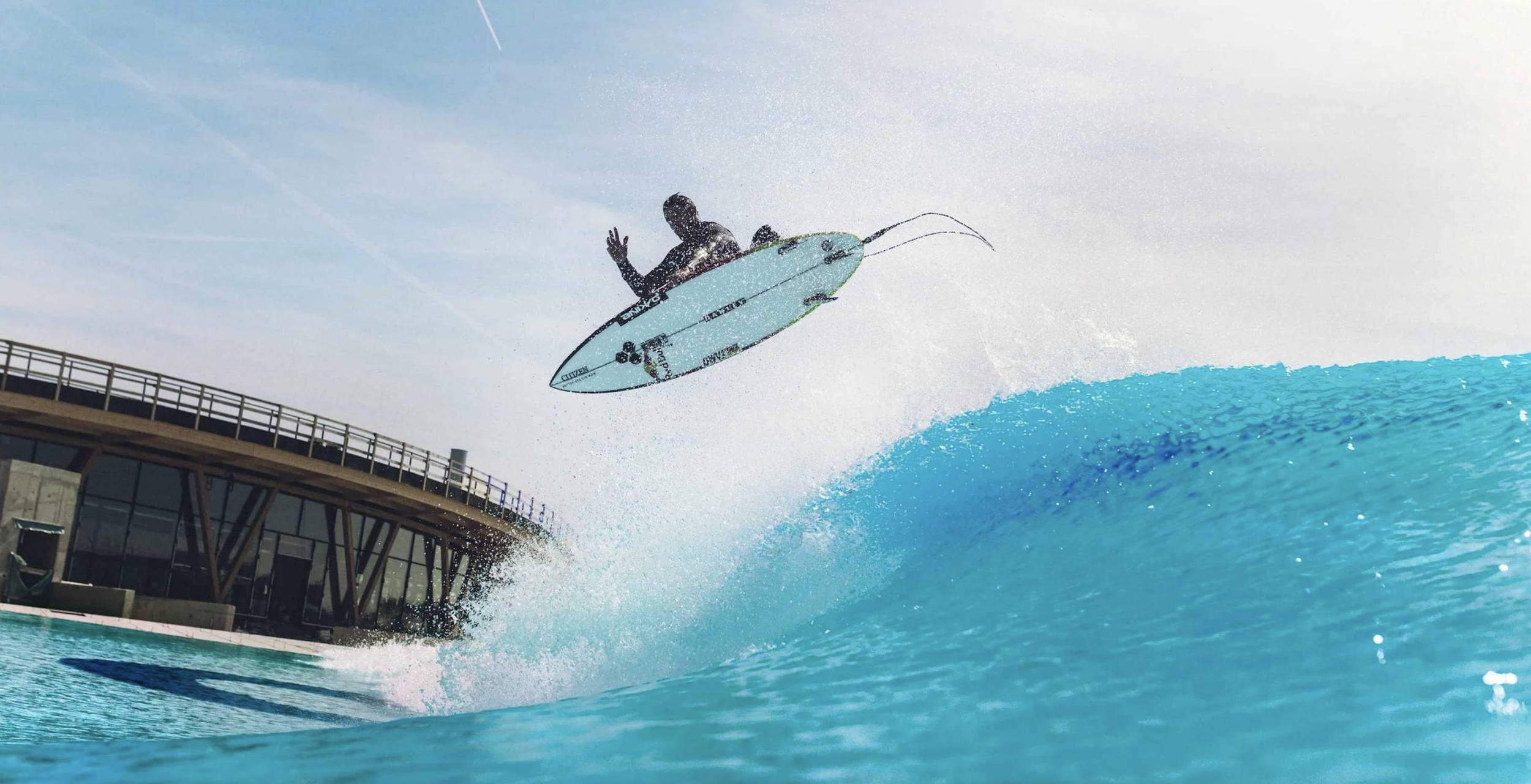
The Future of Surf Competition Belongs in Stadiums (not like a football stadium).
The Future of Surf Competition Belongs in Stadiums (not like a football stadium).
For more than half a century, competitive surfing has been built around one thing: waiting. Waiting for waves. Waiting for tides. Waiting for wind. Waiting for heats to begin. Waiting for scores. Waiting for conditions to improve.
For surfers, this uncertainty has always been accepted as part of the sport's DNA. For spectators, broadcasters and commercial partners, it has always been its greatest weakness. But we are now entering a new era, and the emergence of high-performance wave technology is no longer simply creating perfect waves — it is forcing us to ask a far bigger question: what should competitive surfing actually look like when nature is no longer in control?
Wave Pools Have Exposed Surfing's Biggest Problem
Artificial waves remove almost every environmental variable. Every competitor can receive the same wave. Every ride begins from virtually the same starting point. Every opportunity is equal. On paper, this should produce the fairest surfing contests ever created. Instead, it has exposed something uncomfortable: traditional surf competition formats become surprisingly monotonous when every wave is identical.
This isn't because surfing is boring. It is because the existing competition model was never designed for perfect consistency. The stop-start heat format, priority rules, score building and subjective judging evolved to manage the chaos of the ocean. Remove that chaos and the weaknesses become impossible to ignore, and the audience quickly begins watching the same manoeuvres on the same wave repeated over and over. The excitement disappears.
The Problem Isn't the Athletes
The world's best surfers have never been more talented. Their progression continues at an extraordinary pace, and they are capable of creativity, technical innovation and athletic performance that would have been unimaginable even ten years ago. Yet competition often asks them to perform inside an increasingly narrow definition of what "good surfing" looks like, and the irony is difficult to ignore: at exactly the moment technology allows surfers complete freedom to express themselves, competition increasingly rewards conformity.
Many of the people defining that criteria come from judging systems developed decades ago, with philosophies that struggle to keep pace with the sport itself. Too often, decisions are made by committees and officials rather than by embracing the evolving language of modern surfing and the diverse ways elite surfers interpret a wave. The result is predictable: surfers begin surfing for scores rather than surfing for possibility. Innovation becomes risk. Consistency becomes reward. The audience loses.
Imagine If Other Sports Never Evolved
Every major global sport has reinvented itself. Formula One transformed itself into a global entertainment product. Cricket introduced Twenty20. Rugby embraced Sevens. Golf invested heavily in stadium experiences and technology. Tennis modernised scheduling, broadcasting and fan engagement. Surfing, by contrast, has largely attempted to place new technology inside an old competition model. It feels like putting a Formula One car on a Victorian road.
Wave technology deserves formats designed specifically for wave technology — not adaptations of systems created for unpredictable ocean conditions.
Surf Stadiums, Not Surf Parks
The future is bigger than wave pools. It is surf stadiums: purpose-built venues where every seat offers a clear view, with massive screens, lighting, music, real-time athlete data and digital fan engagement. Entertainment before, during and after competition. Events designed for television and live audiences simultaneously. Not simply places where surfing happens, but places built around the experience of watching surfing.
This is a real question every surf park operator should be asking themselves right now. The infrastructure for stadium-grade surf entertainment already exists in dozens of facilities around the world — the question is whether those venues are being used to their full potential, or simply as sessions sold by the hour. The same transformation that happened to tennis, basketball and mixed martial arts can happen for surfing. Perhaps even more dramatically.
The Audience Must Become Part of the Event
Modern sports fans expect participation. They expect interaction. They expect storytelling. The next generation of surf competition should embrace live analytics, multiple camera perspectives, athlete biometrics, predictive statistics, audience voting, immersive broadcast experiences and digital engagement that makes spectators feel connected to every ride. Fans should understand what they're watching without needing years of surfing experience — the greatest sporting events in the world make complexity accessible. Surfing should do the same.
Wave Pools Have an Environmental Responsibility Too
There is an uncomfortable question that surf parks rarely address head-on: what does it cost the planet to manufacture a wave? Surfing has always drawn its identity from a connection to nature — a sport born from reading the ocean, respecting it, and depending on it. As the sport moves into purpose-built, energy-intensive facilities, that relationship with the environment cannot be left behind. It has to be designed in from the start, not retrofitted once the criticism arrives.
This is where Saudi Arabia's Adrena wave pool offers a genuinely instructive example. The facility, developed by Red Sea Global at The Red Sea destination, operates entirely on renewable energy, uses a closed-loop seawater system that filters and recirculates water through its attractions, and applies dark-sky lighting principles to limit its impact on the surrounding ecosystem. Group CEO John Pagano has said the district was "built with sustainability at its core," positioning it as an example of regenerative rather than purely extractive tourism.
That standard should not be exceptional. It should be the baseline expectation for any surf park claiming to represent a sport so closely tied to environmental awareness. Every operator building or running a wave pool has a responsibility to ask the same questions Adrena has already answered: where does the power come from, how is the water managed, and what is actually being given back to the surrounding environment. A sport that has spent decades campaigning against ocean pollution and coastal development cannot credibly build its future on facilities that ignore their own footprint.
Saudi Arabia Could Become Surfing's Most Unexpected Destination
Many people still associate surfing exclusively with coastlines and ocean swells. That assumption is rapidly becoming outdated. Countries investing heavily in tourism, entertainment and next-generation sporting infrastructure have an opportunity to leapfrog traditional surf nations, and Saudi Arabia may become one of the most fascinating examples.
Vision 2030 is already reshaping how the Kingdom approaches tourism, sport, entertainment and international events. Purpose-built destinations, integrated entertainment districts and world-class infrastructure are changing perceptions at remarkable speed, and a world-class surf stadium fits naturally within that vision. It is climate-independent. It operates year-round. It creates destination tourism. It supports hospitality, retail, events, coaching, participation and elite competition from a single venue. Unlike many traditional surf destinations, every aspect of the visitor experience can be intentionally designed.
The result isn't simply another sporting facility. It becomes an entertainment destination capable of attracting families, tourists, athletes, broadcasters and commercial partners from around the world. Surfing no longer needs to wait for good conditions. It simply opens its doors.
The Future Will Reward Creativity
Technology is changing surfing faster than governing bodies can adapt. That is not unusual — history shows innovation almost always arrives before institutions are ready for it. The organisations leading surfing today face a significant challenge: they must honour the sport's heritage while recognising that heritage alone cannot define its future. Wave technology has not simply created a better training environment. It has created an entirely new sporting platform, and those willing to rethink competition from first principles — not simply modify existing formats — will define the next generation of surfing.
Surfing Deserves Better Than Repetition
The greatest surfers in the world should not be measured solely by how effectively they repeat a judging criteria. They should be encouraged to redefine it. Sport evolves when athletes are allowed to expand the boundaries of possibility, and wave technology finally gives surfing that opportunity.
The question is no longer whether stadium surfing will become mainstream. The technology is already here. The investment is already happening. The audience is waiting. The only real question is whether the sport — and the surf parks now responsible for its future — has the courage to reinvent itself, sustainably and on its own terms, before somebody else does it for them.
Because the future of surf competition won't be built by asking how to improve yesterday's format. It will be built by imagining what becomes possible when every wave is perfect, every fan has the best seat in the house, every surfer is finally free to show us what they believe great surfing truly looks like — and every facility making that possible can stand behind its environmental footprint as confidently as it stands behind its waves.
About the author
Justin West is a professional surf coach and competition judge, grew up and later worked in Saudi Arabia — often having to travel abroad simply to catch a wave. He is the CEO and Founder of wpsl.live podcastportugal.com and justinwestcoaching.com
Power to the People: How WPSL's People Power™ JUDGING Actually Works.
POWER TO THE PEOPLE: HOW WPSL'S PEOPLE POWER™ ACTUALLY WORKS
For decades, competitive surfing came down to five people in a tower nobody in the crowd can see, holding up a number nobody in the crowd can question. Great wave? Doesn't matter what you thought. The judges have already decided.
We're done with that.
Every wave. Every heat. Every event. You decide.
Not a panel. Not a governing body. Not five people who trained to score a checklist. You — watching live, or watching the replay — vote for the surfer you think actually won the heat.
That's People Power™ APP. It's the mechanism behind everything we've been saying about WPSL from day one: we build the canvas, the surfers draw the lines, and the audience decides what great looks like. This is that idea, built into an actual voting system.
"But won't the most popular surfer always win?"
Maybe. And here's the thing — we're genuinely fine with that.
Popularity has always been part of professional sport, whether the scoring system admits it or not. Athletes today aren't just technicians executing manoeuvres for a panel; they're brands, storytellers, personalities people choose to follow. People Power™ doesn't invent that dynamic — it just stops pretending it isn't there, and hands the outcome to the people the sport actually exists for.
What that unlocks is bigger than a fairer scoreline. Underdogs get discovered. New personalities break through, not because they've cracked a scoring formula, but because they connected with a crowd. Athletes stop being purely dependent on landing a manoeuvre a certain way for a certain judge, and start building something that travels with them — a following, a story, a reason people show up specifically to watch them surf.
WHAT IT MEANS IF YOU'RE WATCHING
You stop being a spectator and become part of the result. Vote live during heats. Back your favourite surfer. Build a following of your own inside the WPSL community — rankings, prediction competitions, bragging rights for calling a result before the crowd caught on. You're not watching surfing happen to a panel anymore. You're part of how it gets decided.
WHAT IT MEANS IF YOU'RE AN ATHLETE
Your ceiling stops being "did five judges like that manoeuvre." People Power™ rewards surfers who can do the hard part — genuinely excellent surfing — and also connect with the people watching it. That's not a lesser skill. Building an audience, telling your story, giving fans a reason to back you: that's part of what it means to be a professional athlete in 2026, whether surfing's old scoring system accounted for it or not.
HOW WE'RE ACTUALLY ROLLING THIS OUT
Here's the honest version, because we'd rather under-promise and over-deliver than the other way around: we're not launching a fully built app on day one.
We're starting on Instagram.
Before we invest in building and scaling a dedicated People Power™ app, we want to test the format where surf fans already are — live polls and story voting on Instagram, tied to real heats, real athletes, real waves. It's the fastest way to find out what actually works: how people want to vote, what makes them want to vote again, what a fair and exciting live-voting experience should feel like before we lock it into permanent product decisions.
Think of it as the pilot before the platform — the same instinct behind everything else at WPSL. Prove the concept in the water, then build the infrastructure around what actually works, not what we assumed would work from a whiteboard.
So if you're around for WPSL1 at Adrena, Saudi Arabia, this is where it starts. Follow along, vote in the polls, tell us what felt right and what didn't. You're not just watching us build People Power™. For this first stretch, you're the reason we'll get it right.
Surfing decided by the people. Let's see how loud you are.
WPSL — Wave Pool Surf League. wpsl.live